

Who's in Your Kitchen?
What I'm watching as pharmacists stop building alone

Yesterday on LinkedIn I named something I’ve been watching for the last six weeks. Pharmacists aren’t coming to me alone anymore. They’re coming in pairs.
Today I want to go deeper, because the more I sit with what I’m watching, the more I think it’s the most important pattern I’ve seen in eight years of doing this work.
I built PIVOT for the pharmacist sitting alone in their kitchen at 11 PM wondering if they’re crazy for thinking there might be a better way. That’s who I was when I started. Two littles asleep upstairs, eight pharmacy jobs behind me, a clinical compass that wouldn’t stop spinning. I assumed the pharmacists who would show up to my work would look like the woman I was at that kitchen table.
This launch, that’s not who said yes.
This launch, pharmacists came to me in pairs. And the more I look at the three pairs I’m coaching right now, plus a fourth pair where the spouse showed up to my LinkedIn Live with a notepad in hand, the more I see that what they’re building has a shape I didn’t design for and didn’t expect.
It works better than the solo model.
That’s not a small claim. So let me show you what I mean.
The first pair: two pharmacists, one decision
The first pair lives in the Northeast. They’re peers — same employer, same retail organization, similar clinical backgrounds. They’ve worked next to each other long enough to know each other’s operating systems before they could put words to them.
When they decided to build something together, neither of them was going to do it alone. That wasn’t a discussion. They had each watched solo entrepreneurship in their professional circles fail enough times to know that the math didn’t work for them as individuals. But together — that was different.
Here’s what I noticed on our last coaching call. One of them is sacral. She knows yes or no in her gut, instantly. The other is more deliberative — she has to talk through things to get to clarity. In a one-pharmacist business, that deliberative pharmacist would have stalled herself out. Six months of “I need to think about it” before any contract got signed. The sacral pharmacist would have moved fast and missed the structural details that keep you compliant when an audit hits.
Together, they’re a closed loop. One opens the door. The other closes it. One leads with relationship. The other lands the structure. When they walk into a physician’s office, they’re harder to dismiss than either would be alone.
The risk in this pairing isn’t external. It’s internal. Two equal partners can split work in ways that look fair on paper but create silent resentment. One can hoard responsibility because she trusts herself more than she trusts the partnership. The other can over-defer because she doesn’t want to be perceived as pushy. I watch for these patterns in our coaching calls and we name them out loud, because the only thing that breaks a peer pair is unspoken expectations.
But when peer pairs work, they multiply. They don’t just add their hours together. They make each other’s hours more valuable.
The second pair: the owner and the clinical lead
The second pair is in the South. He owns a small network of pharmacies. She’s his lead clinical pharmacist and co-founder of the wellness arm he’s been trying to build for years.
She’s been doing the clinical work for free for as long as I’ve known her. Med rec calls she logged as customer service. Disease state coaching she wrote up as professional courtesy. Compliance audits she ran on her own time because it bothered her that no one else was running them.
When they came to PIVOT together, the pitch wasn’t “let’s build something new.” It was “let’s finally bill insurance for what she’s already doing every day.”
That’s a different kind of pair. The power structure is asymmetric — he’s the owner, she’s the lead — but it’s not broken. He brings infrastructure, capital, established physician relationships, and the freedom to take strategic risks. She brings the clinical execution, the patient-facing trust, and the operational knowledge that lives in her hands and not in his.
Without him, she’d be building two things at once: the consulting practice and the business that supports it. With him, she gets to focus on the work she’s already trained for.
Without her, he’d have a service line on paper that no one knows how to actually deliver.
The risk in this pairing is that she carries everything because she’s the doer, while he’s tied up running the pharmacy network. That’s a real failure mode I’ve seen play out in other owner-and-lead pairs that didn’t make it. The mitigation is structural: you have to build SOPs from day one, hire a third pharmacist as soon as the math allows, and get the owner’s hands dirty in the consulting work for the first three months even if it’s inefficient — because if he doesn’t understand it from the inside, he can’t back her decisions when they get hard.
The third pair I’m coaching, also an owner-and-lead, is in New England. Different size, different state, different patient population — but the structural dynamic is the same. Owner brings the infrastructure and capital. Clinical lead brings the execution and patient trust. The work ahead is dividing the labor in a way that doesn’t quietly kill one of them.
When this kind of pair works, the leverage is real. A pharmacy owner with a working consulting practice has built a second revenue stream that’s more durable than dispensing. A clinical pharmacist with an owner backing her has runway most pharmacists never get.
The fourth pair: the spouse with the notepad
The fourth pair didn’t enroll through a coaching call. She enrolled through my LinkedIn Live.
She’s a pharmacist I’ve known since pharmacy school. Twenty years ago we sat in classrooms together. Last week, on a Sunday night Live, she watched me talk about pharmacist-led care management with her husband sitting next to her on the couch. He had a notebook open. He was taking notes.
Four days later, they enrolled together.
Not because he’s a pharmacist. He’s not. He’s the household financial decision-maker, the accountability partner, the person who’s going to ask her on a hard Thursday whether she made the calls she said she’d make. He’s not the doer. He’s the witness — the one whose presence in the project means she can’t quietly let it die.
That’s a different kind of partnership than peer or owner-and-lead. The life-partner pair doesn’t share execution. They share emotional and financial weight. The pharmacist still does the clinical work, but she’s not doing it in a household that doesn’t know what she’s doing or why.
I’ve watched solo pharmacists tell their spouses about their entrepreneurial work for years without ever inviting the spouse into the actual decisions. The spouse becomes a polite observer. The pharmacist becomes lonely. The work stalls.
When the spouse is in, with a notebook in their hand, watching the same Live the pharmacist is watching, the dynamic changes. The work becomes a household project, not a personal one. The midnight self-doubt doesn’t get to win because there’s another person in the bed who’s invested in seeing it through.
The risk here is different from the other two. The risk isn’t power asymmetry or hoarded work. The risk is that the spouse isn’t actually invested — that they’re nodding politely and not doing the witnessing. The mitigation is asking out loud, on purpose: Are you in this with me, or are you just being supportive? Those are different things, and a marriage can survive either, but only one of them helps the business get built.
Why I’m writing this now
I want to tell you something I don’t often tell people, because it’s the part of my story I’ve kept private for most of the years I’ve been doing this work.
I didn’t start building because I suddenly developed entrepreneurial ambition. I started building because two people in my life made it safe to.
The first one was my mother.
In pharmacy school, I’d call her at 1 AM and tell her I wanted to quit. I’d say I was going to become a Walmart greeter instead. I was serious every time. And every time, she’d let me say my piece, and then she’d quietly say if it were easy, everyone would do it. Now close that book and go to sleep. And then she’d hang up on me. No pep talk. No motivational speech. No “you can do this!” Just the truth, said low, with absolute certainty in me even when I had none in myself. Then back to studying.
Years later, when my second marriage ended, I landed on her floor. Two kids, three bags of clothes, and a truck I couldn’t afford. She helped me stand back up. Not by fixing anything for me. By being the floor — solid, steady, unmoving — until I could put weight on my own legs again.
That’s where I was when I met Jeff.
I tell you that order on purpose, because it matters. My mother made it possible for me to be standing when Jeff walked into my life. Without her floor, I wouldn’t have been a person Jeff could partner with. The “borrowed safety” I built every business on didn’t start with my marriage. It started with her. It’s been there for all 44 years of my life.
Jeff added a different layer. He gave me three things I’d never had at the same time before: safety, protection, and the steadiness of being provided for. Not financially provided for, though that’s part of it. Provided for in a deeper sense — knowing that someone in my life was solid, was going to stay solid, and wasn’t going to fail me. With my mother as the floor and Jeff as the partner standing on it with me, something started to shift. I started to feel something I hadn’t felt before: I started to feel unsettled.
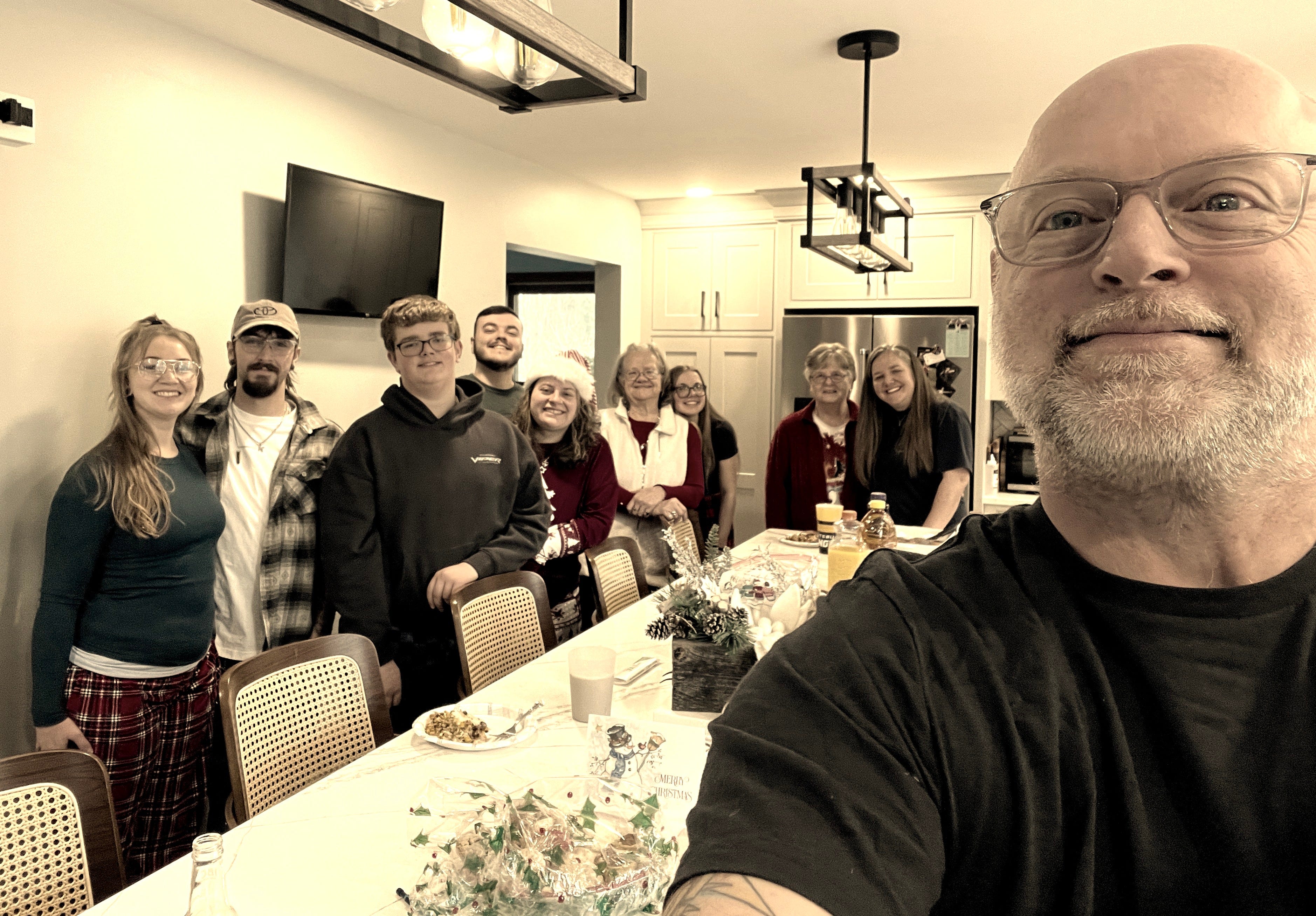
The first conversation I ever had about wanting to do something different in pharmacy wasn’t at a kitchen table. It was in our driveway, sitting on the tailgate of Jeff’s truck after a long day of yard work, with my mom there too. Three of us. Sweat-tired, sun-tired, the kind of tired where the conversations get honest because nobody has the energy to perform anymore. That’s where I first said out loud that I wanted to build something different. Jeff didn’t talk me out of it. My mom didn’t talk me out of it. Neither of them said that’s a great idea, you should do it! either. They just listened. And in being listened to without being argued with or rushed, I felt the first crack of something opening in me that had been closed for a long time.
The unsettlement people often read as “the year she woke up to her entrepreneurial calling” wasn’t that. It was the year my body finally felt safe enough to want more than survival. The year my nervous system stopped being on guard long enough for ambition to come back online. And that safety wasn’t built in one conversation in a driveway. It was built across decades of a mother who told me to close the book and go to sleep, and a husband who tattooed Never Quit. All In. All Out. on his side and lived every word of it.
I built TM Pharmacy Consulting from that safety. I built PIVOT from that safety. I built Tendco from that safety. I’m writing this article from that safety. Every public-facing thing I’ve done in the last decade was made possible by two people who, behind the scenes, have been my steadiness — and who continue to be the foundation under every future build I have in me.
Tomorrow morning, my mom has cataract surgery, and I’ll be at the hospital with her while Jeff is at home with our two kids and our three dogs. Eight days from now, when I have hip surgery, the roles flip and expand. My mom will be in our house with Jeff, swapping out ice packs through the night, driving me to PT, doing the recovery shift the way she’s done every shift of my life when I needed it. Jeff will be running the household. He’ll be the one bringing me snacks on a schedule I can’t hold to myself. He’ll be the one finding Dr. Pepper Zero with creamy coconut creamer at all hours when the recovery brain wants what it wants. The same three of us who sat in that driveway ten years ago will be in the same house, reorganized around the season we’re in.
There’s a tattoo on Jeff’s side that reads Never Quit. All In. All Out. Three lines wrapped in flames. It’s not a slogan to him. It’s how he’s lived our marriage from day one. It’s how he showed up at the kitchen table when I was still figuring out what I wanted. It’s how he showed up at every single launch I’ve ever run. It’s how he’ll show up tomorrow morning, and eight days from now, and through every recovery week ahead. There is no half-version of him in this household, and there hasn’t been for ten years.
My mother doesn’t have a tattoo. She has something stronger: 44 years of if it were easy, everyone would do it. 44 years of being the floor. 44 years of standing back up alongside me every time I needed to.
I’ve built two businesses. But I’ve never built anything alone. Not because I refused to. Because I wasn’t capable of building alone. And I’m not ashamed of that anymore.
This is the part of my work I’ve kept hidden because it felt private. I’m choosing to share it now because I think the pharmacists I’m coaching deserve to know that the woman teaching them how to build a practice didn’t do it from a position of original strength. I did it from a position of borrowed safety — borrowed first from my mother and then, years later, from my husband. And the borrowing has been mutual, because relationships built on all in, all out and if it were easy, everyone would do it aren’t transactional. They’re foundational.
The pharmacists who are coming to me in pairs right now are walking the threshold I walked years ago. They’re feeling something the solo pharmacists in their kitchens at 11 PM aren’t yet feeling. They’re feeling safe enough to want more. And the safety isn’t coming from inside them. It’s coming from the people they’re walking in with.
If you’ve been telling yourself you have to build this kind of practice alone — because that’s how pharmacy taught you to do everything else — I want you to consider that the pharmacists I’m watching succeed aren’t operating that way at all. And the ones succeeding the fastest aren’t necessarily the strongest pharmacists. They’re the pharmacists who let someone in.
So look around. Your kitchen. Your pharmacy. Your network. Your family. Your mother’s floor.
Who’s already in there with you?
Have you let them in?
— Thea
The next section is for paid subscribers. Below this paywall I share what I’ve learned about the structural patterns that determine whether a pharmacist pair will succeed or quietly break, and the specific questions to sit with if you’re considering whether to build alone or with someone. — Thea
